Fashion platform brings Chinese designers to Korean shoppers while expanding its retail network across China
In China, Musinsa's overseas aspirations take their most vivid form. Not only does Korea’s leading fashion platform run more stores there than anywhere abroad, but it also brings Chinese designers home to Korean shoppers.
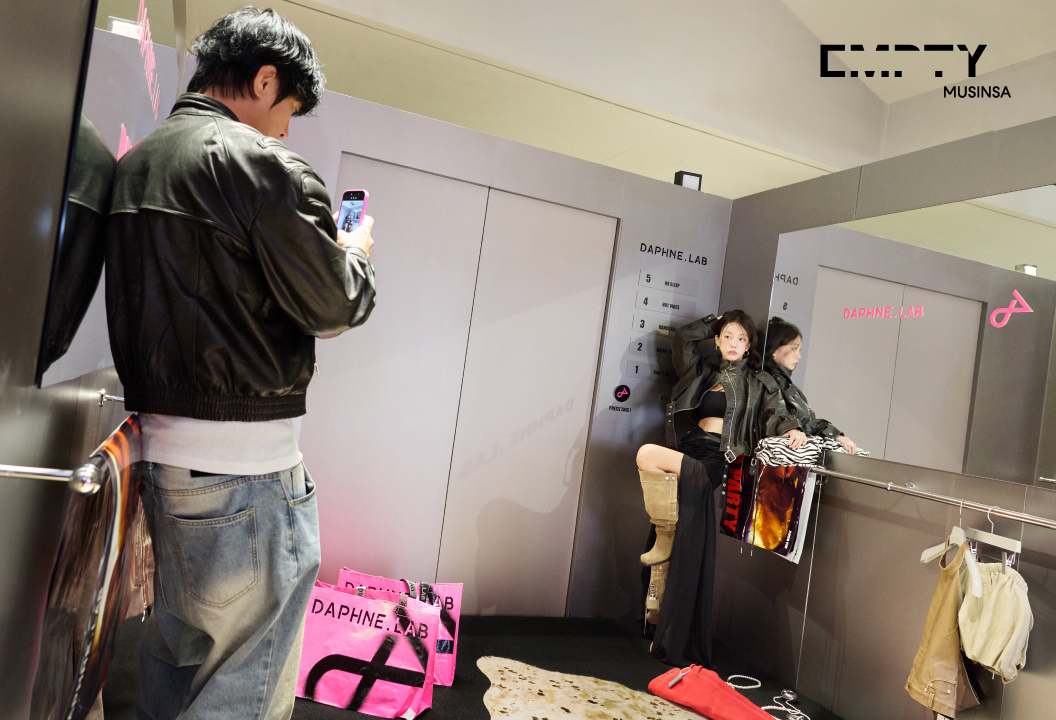
Through Musinsa Empty, its high-end select shop with three outlets in Seoul, Musinsa introduces Chinese designers to Korean shoppers. Its latest guest, footwear label Daphne.Lab, is holding its first Korean pop-up at the Seongsu branch, Musinsa announced Monday.
Earlier, Musinsa Empty launched an exclusive collaboration between Chinese label 24ans, known in Korea for designs worn by idols and actors, and Japanese dancer Uwa Kitadera in September.
"Retail platforms are teaming up with overseas brands to secure distinctive products, and those brands get to test Korean demand," one industry official observed. "The interests of both sides align."
Chinese brands now carry real weight for Musinsa. Transaction value for 18 Chinese designer brands at Musinsa Empty, including Roaringwild, Shushu/Tong and Feng Chen Wang, jumped 181 percent last year, according to the company.
Musinsa’s warm welcome for Chinese fashion owes much to a new generation of designers, many trained in London and New York, who are shedding its old reputation for cheap clothing.
"Consumers used to buy Chinese clothes for the price, yet now more of them seek those clothes out for design and sensibility," a fashion industry official explained. "Social media buzz and actual travel to China have combined to raise brand awareness quickly."
Chinese fashion, now spanning every price point from ultra-cheap to high-end, is finding more buyers in Korea. Imports of Chinese apparel hit a record $4.89 billion last year, up 8.1 percent, according to the Korea Customs Service. Import volume has climbed about 45 percent since 2021.
Musinsa advances just as briskly in the other direction, with Musinsa China, its joint venture with Anta Sports launched last year, propelling a swift brick-and-mortar rollout.
The company runs one Musinsa Store and four Musinsa Standard shops, and two more slated for Shenzhen at the end of this month will lift its count to seven about a year after entry and extend its reach from eastern to southern China.
The platform also opens doors for Korean labels in China. With Korea’s Trade Ministry and the Korea Trade-Investment Promotion Agency, it runs a Shanghai pop-up through November that showcases 15 Korean brands.
Online, its new store on Tmall Global, China’s largest cross-border e-commerce platform, joins last year’s Tmall flagship to cover both domestic and cross-border shoppers.
Across the strait, Taiwan marks Musinsa’s next frontier.
The company set up a subsidiary there in July after its online sales on the island more than doubled over three years. Taiwanese tourists also ranked third among foreign shoppers at its Korean stores last year. Musinsa now targets about 15 Taiwanese stores within five years.
Breakneck expansion carries a steep price, however. Every new outlet saddles Musinsa with rent, payroll and inventory. Industry watchers caution that it must convert foot traffic into bigger-spending customers to recoup the investment.
Musinsa said it is investing boldly in a still-nascent Chinese market and expects gaining a foothold to take time.
minmin@heraldcorp.com